What is Bingo?
Bingo is a number-matching game with a simple structure:
- Each player has one or more Bingo cards — typically a 5×5 grid with random numbers from 1-75 (American Bingo) or 1-90 (British Bingo).
- A caller randomly draws numbers one at a time and announces them.
- Players mark off numbers on their card that match the called number.
- The first player to complete a winning pattern (typically a full row, column, or diagonal) shouts “BINGO!” and wins.
It’s a classic luck-based social game. There’s effectively zero strategy in standard Bingo — the only “skill” is being the first to spot a winning pattern, and even that is automated in digital versions.
But Bingo has a magic that pure-luck games shouldn’t have: the call-and-mark rhythm, the gradual closing of patterns, and the satisfying social moment of shouting “BINGO!” make it endlessly replayable.
How to win
Get a winning pattern on your card before any other player. Standard winning patterns:
- Line: 5 marked numbers in a row (horizontal, vertical, or diagonal).
- Four corners: All four corner squares marked.
- Full house: Every number on your card marked.
- X / T / L shapes: Specific patterns that span multiple lines.
In American 75-ball Bingo, a single line typically wins. In British 90-ball Bingo, players progress through “one line”, “two lines”, and “full house” with separate prizes for each.
Pop Play uses 75-ball American Bingo with line-and-pattern wins.
The card structure
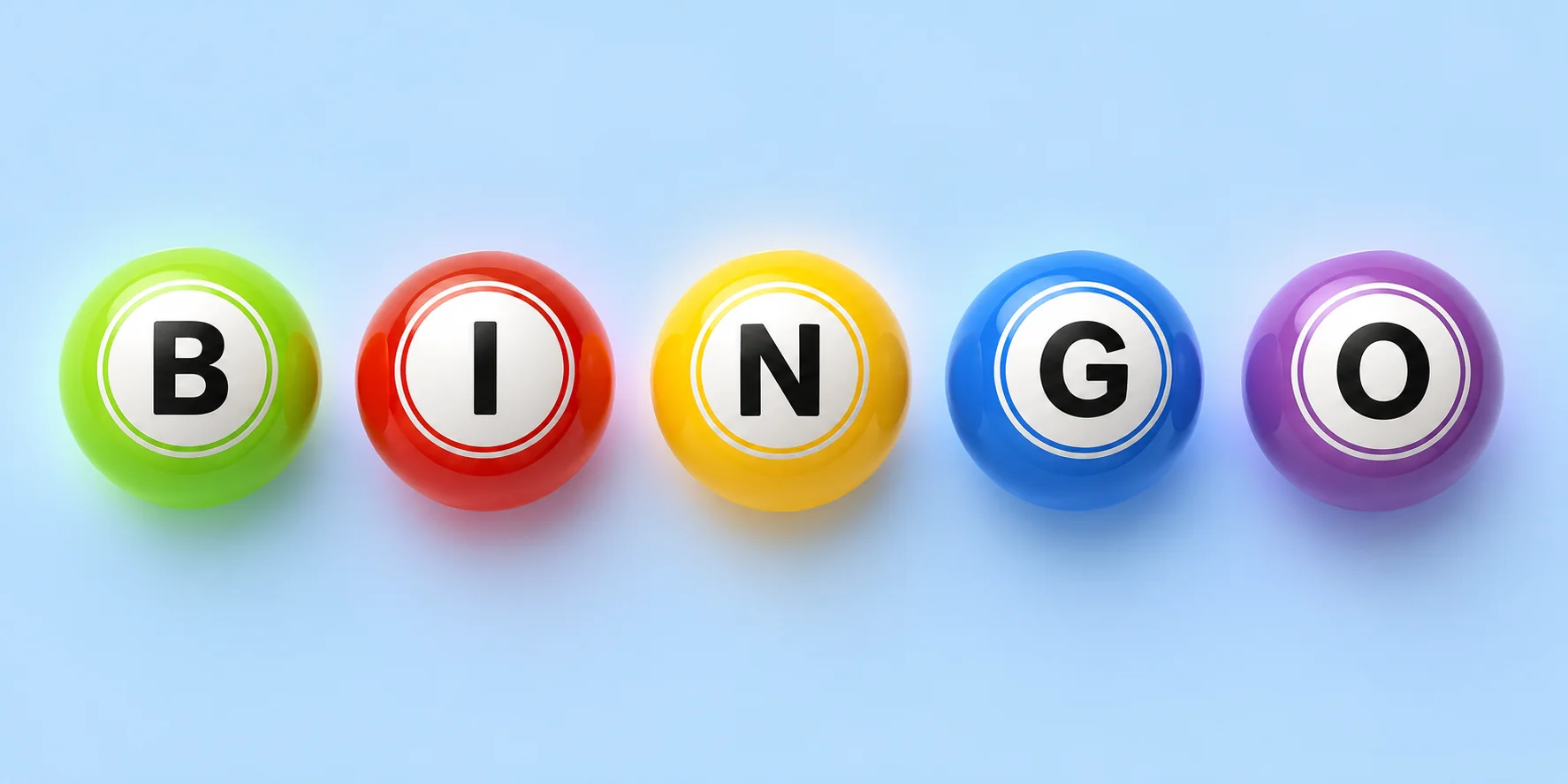
A standard American Bingo card is a 5×5 grid with the columns labelled B-I-N-G-O:
- B: numbers 1-15
- I: numbers 16-30
- N: numbers 31-45 (centre square is a free space)
- G: numbers 46-60
- O: numbers 61-75
Each column has 5 randomly-chosen numbers from its range, except the N column which has 4 numbers and a “FREE” space in the centre (always pre-marked).
Each player’s card has a different random selection of numbers, so two players holding cards never have the same numbers.
In Pop Play, cards are auto-generated.
A turn
In standard Bingo there isn’t really a “turn” — it’s a continuous call-and-mark cycle:
- The caller (or the app) draws a random number from the pool of remaining numbers.
- The number is announced — e.g., “B-12!” or “O-72!”
- Players check their cards. If the number is on your card, mark it.
- If marking that number completes a winning pattern, shout “BINGO!” — or in digital Bingo, tap the “BINGO!” button.
- The first valid claim wins the round.
That’s the whole game.
What makes Bingo great
Bingo’s persistence as a social game is genuinely interesting. Pure-luck games rarely sustain mass appeal — they can’t reward skill or learning, so people lose interest. Bingo defies this for three reasons:
-
Anticipation arc. Marking off numbers gradually builds tension. A card with 4 of 5 marked numbers in a row is an electric moment — every subsequent call could end the round.
-
Social shared moment. Bingo is almost always played in groups. The call-and-mark rhythm synchronises everyone’s attention. The “BINGO!” shout is communal even though only one person wins.
-
Variation in pattern. Different patterns (X, T, full house, four corners) on the same card structure vary the experience. A single Bingo session can play 5-10 rounds with different winning patterns — each round feels fresh.
Bingo’s history
The game’s earliest direct ancestor is “Lo Giuoco del Lotto d’Italia” (The Lottery Game of Italy), a national lottery established in 16th-century Italy that’s still running today. Players received tickets with random numbers; numbers were drawn weekly and prizes awarded to ticket-holders matching the draw. The mechanics are essentially Bingo — pre-printed numbers, random calls, match-to-win — minus the card-grid structure.
The game spread to France in the 1770s as “Le Lotto”, where it became a popular salon game played by aristocracy. Cards with 3×9 number grids were sold; players marked off called numbers and the first to complete a row (or all rows) won.
In the early 1800s, Le Lotto spread to Germany, where it was used as a teaching tool for arithmetic in primary schools — children practised number recognition and basic counting through gameplay.
The modern American Bingo emerged in the late 1920s, when Edwin S. Lowe, a New York toy salesman, encountered a regional carnival game called “Beano” — players marked beans on numbered cards. Lowe brought the game back to New York, refined the card design, and rebranded it. The most-told origin story for the name “Bingo” is that an excited player shouted “Bingo!” instead of “Beano!” — though competing accounts of exactly how and when this happened exist. Lowe trademarked the name and began selling Bingo sets nationally.
By the 1930s and 1940s, Bingo became enormously popular as a fundraising game — particularly in American Catholic churches, where it raised millions of dollars for parish budgets through the Great Depression. Church Bingo nights became a defining American cultural ritual.
Today, commercial Bingo halls operate in dozens of countries, online Bingo is a multi-billion-dollar industry, and digital Bingo apps have revived interest in the casual mobile space. Pop Play’s version is a competitive head-to-head Bingo between two players (or you vs. a bot) — different from traditional group Bingo but using the same core mechanics.
Bingo strategy primer
Standard Bingo is a luck game. There is no real strategy. But:
1. Multiple cards
Some Bingo variants let you play multiple cards simultaneously. More cards = higher chance of winning, but also more attention required. Pop Play uses single-card Bingo for fairness.
2. Card analysis (in head-to-head mode)
In Pop Play’s competitive mode, both players get separate cards. Sometimes you can predict — based on which numbers have been called and which haven’t — whether your opponent is “close” to a win. This is informational, not skill-based, but adds a strategic dimension to head-to-head play.
3. Pattern recognition
Quick pattern recognition (spotting that you’ve completed a line) gives you a small edge in fast-paced games. In Pop Play, the app auto-detects winning patterns, so this matters less, but in physical Bingo it’s the only “skill”.
4. Stay focused
Missing a called number that would have won you the round happens in physical Bingo. In digital Bingo this can’t happen, but in casual social play it’s the most common error.
Bingo on Pop Play
Pop Play uses a head-to-head competitive 75-ball American Bingo variant:
- Two players each have a card; numbers are called sequentially.
- Both players race to complete a winning pattern first.
- Smart bot opponents at multiple difficulty levels (bots have the same number-mark advantage you do — pure speed of pattern recognition).
- Online multiplayer with friends or matchmaking.
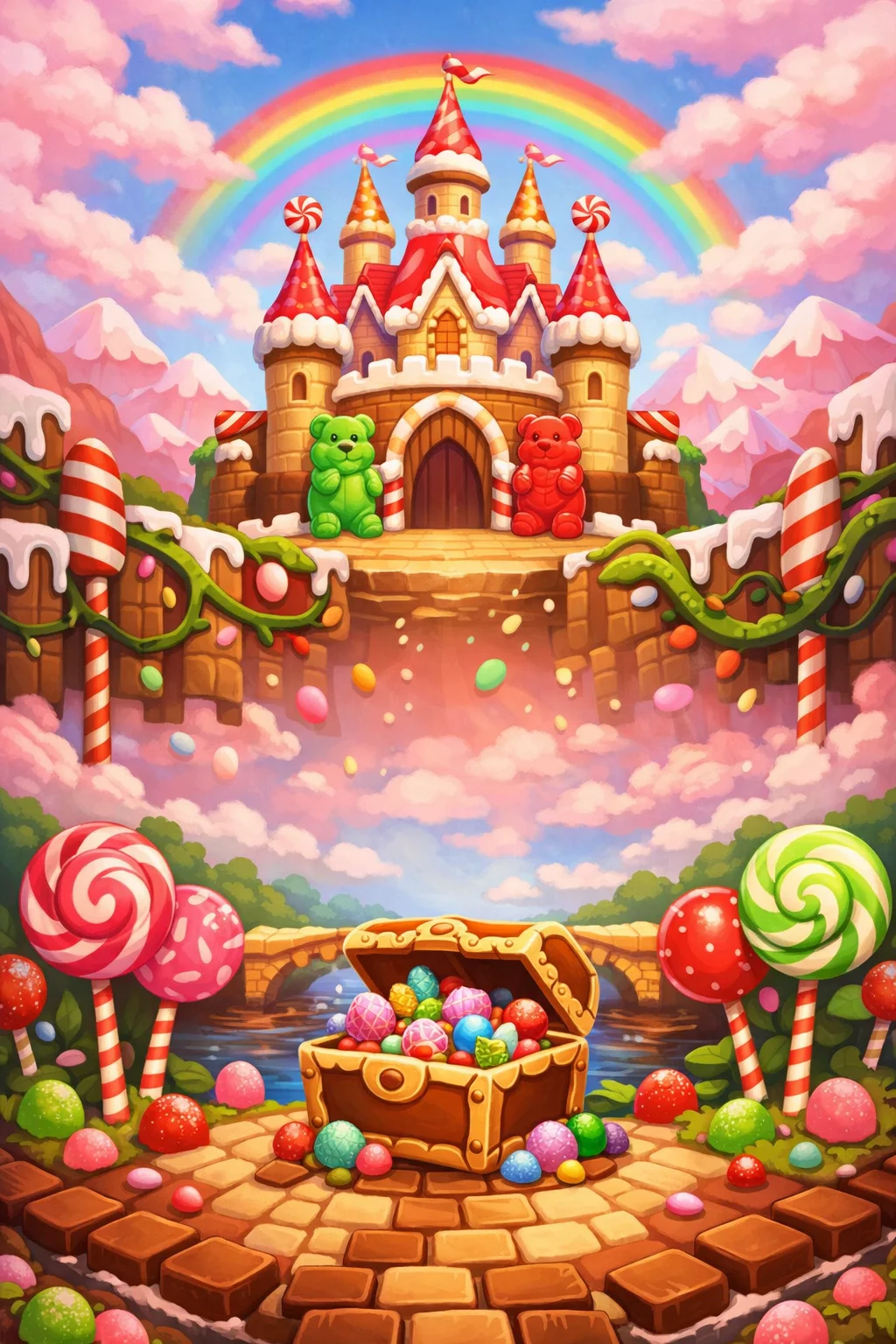
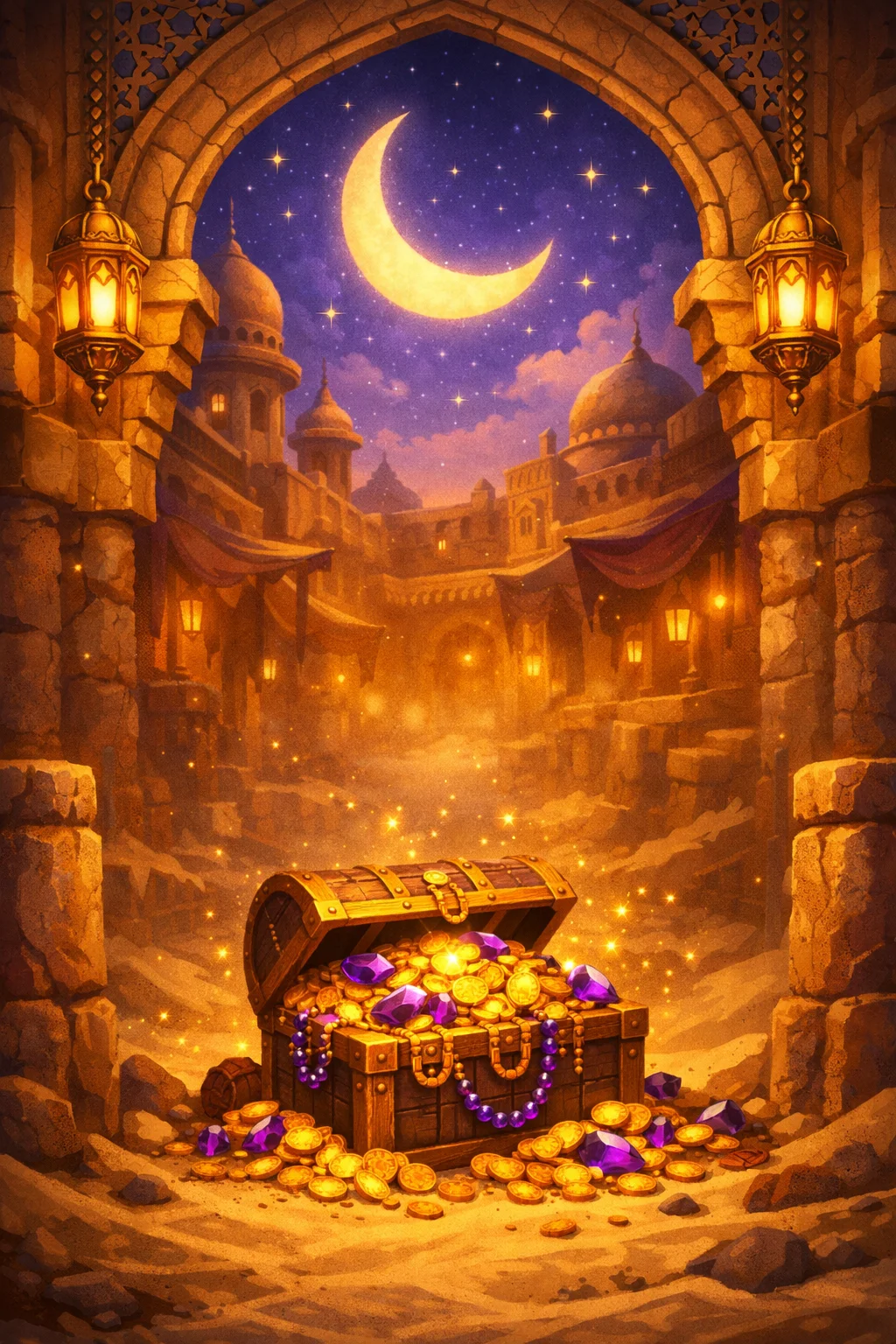
- Themed worlds — Candy Kingdom, Celestial Palace, Arabian Nights, and Neon Cyberpunk all suit Bingo’s playful, communal feel.
- Auto-mark mode (mark numbers automatically when called) and manual mode (mark by tapping) both available.
Frequently asked questions
What’s the difference between American and British Bingo?
American Bingo uses 75 numbers and a 5×5 card with B-I-N-G-O column headers. Wins on a single line. British Bingo uses 90 numbers and a 3×9 card. Wins on “one line”, “two lines”, and “full house” with separate prizes.
Why is the centre square free?
Tradition. The centre square of an American Bingo card has been pre-marked since at least the 1940s. It evens out cards (some cards’ “N” column would otherwise be especially weak) and ensures that any line through the centre is a one-mark-shorter pattern.
How long is a Bingo game?
Pop Play’s head-to-head Bingo finishes in 2-5 minutes typically — a winning pattern is usually found within 25-40 number calls.
Is there strategy in Bingo?
In standard luck-based Bingo, very little. In Pop Play’s competitive head-to-head mode, the strategic dimension is minimal but present (reading your opponent’s progress).
What does “BINGO!” mean?
It’s the shout when you complete a winning pattern — used since the late 1920s when Edwin S. Lowe popularised the game. The word itself is widely said to have been coined accidentally by an excited player at the regional fair where Lowe first encountered the predecessor game.
Where can I play Bingo on mobile?
Pop Play has it free. Many other Bingo apps exist on iOS and Android — most lean heavily into casino-style aesthetics with aggressive ads. Pop Play’s version is competitive head-to-head with no ads.